Hi there. If you’ve made it to this page, you’ve received one of my 2026 calendars as a small token of appreciation for your friendship and support.
Note: You are not seeing things, you did get a 2025 calendar with new photos – I chose the wrong template, and somehow it got past me before I mailed out the calendars. I hope you will still enjoy the photos and rely on your phone or computer for the calendar part. Did you know there is research on the benefits of keeping photos of nature around your work space and how that can make you more productive and ease stress. Check out the book Nature and the Mind to learn more.
I have created this page to share more information about the images, including the species featured this year and why I chose them. In some cases, the featured bird is a “lifer,” meaning it was my first time seeing that bird when I took the photo. Sadly, in many cases the bird in the photo also represents a critically endangered species due to the impacts from climate change and habitat loss to development. Stay tuned to the end to learn about some ways you can help.
Before we get to the birds, a few personal updates. I am still at CAST, where my current role is Director of Disability and Accessibility. Cindy unretired at the beginning of the school year and is now back at her old school, in the same role (sign language interpreter). Both of us continue to champion access and inclusion in our own ways in what has been a really tough year for those of us who care about equity and inclusion. I’ve needed nature and the birds more than ever to get through it all.
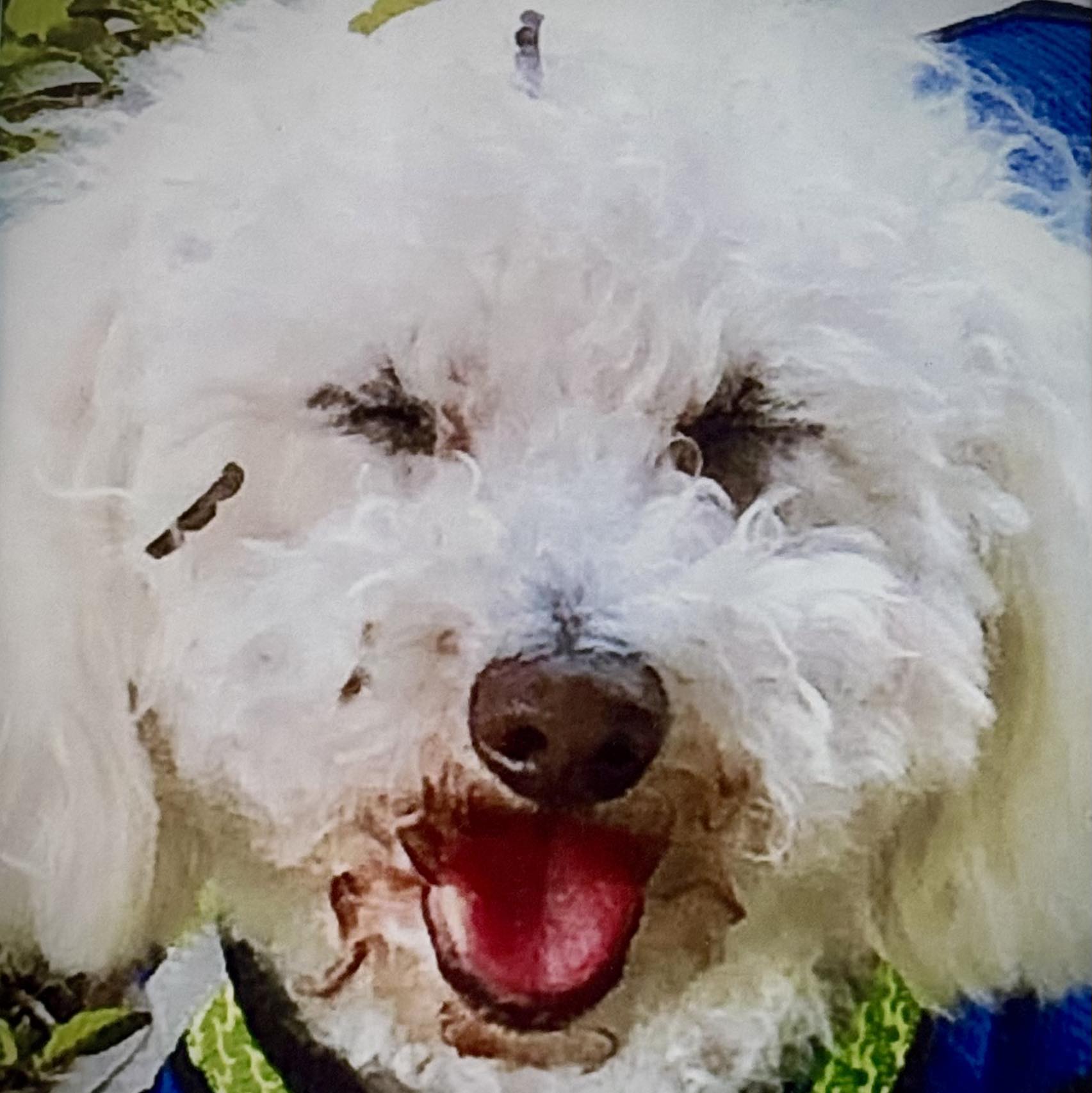
And some sad news: we lost our Bruno right before the Thanksgiving holiday. We were hoping he would make it to 18 but we were just happy to have him with us for six great years after adopting him as a senior dog at 11. He was a great companion during the pandemic, several hurricane evacuations, and more. We miss him so much! Here is a photo from a happier time. It is from the first time we took him to Fort de Dosoto and all these “stickies’ got on his poodle/bichon fur. I have a large print of this photo hung in our living room and it is the first thing I see in the morning as I go into the office for work. It makes me happy!
And now to the birds. While it ended with a flourish, most of this year I was slowed down in my bird photography due to a couple of factors:
- Our area was hit by two major hurricanes in the fall last year and they did a lot of damage to our parks and preserves. One of my most frequented locations, Fort De Soto, was closed for most of the winter and only opened just in time for spring migration. Even then, most of the trees had been stripped of the fruit and leaves the birds rely on for food and protection from the elements and predators. The result was a less than ideal spring migration, but I’m happy to report the habitat is slowly recovering back to its former state and this winter and spring should be better.
- I had a medical scare in September while chasing a lifer at Treasure Island beach (I got the bird!). That slowed me down a bit in the second half of the year as I was not able to do any solo birding out of precaution for my safety. You will not see as many shorebirds on this year’s calendar because I didn’t have as much time at the shore this fall.
Cover – Left
Black skimmers are listed as a state threatened bird in Florida. They nest right on the open beach and this is an issue because their nesting season coincides with our busiest weekends for beach activity (including major holidays such as Memorial Day and 4th of July). Fortunately, our Audubon chapter does a great job of protecting the birds, with posted signs and roped off areas around the nests and stewards who keep an eye on the chicks.
This photo was taken with al long lens from well outside the roped off area to protect the birds. It shows an adult skimmer “tenderizing” a small fish to make it easier for the chick (likely just a few days old) to swallow it whole. Both parents take turns flying off and bringing fish back to their chicks. The June photo shows how they catch the fish by “skimming.”
Observing life at the colony is not for the faint of heart. Many of these chicks will not make it. Predation from gulls is high, and even straying into a neighboring nest can be fatal as the parents are really protective of their own chicks. How you can help: keep dogs on a leash when you are around nesting birds, and minimize flushing the birds by walking around colonies and giving the birds their space. All it takes is a few seconds of distraction for a gull to have an easy meal, and every single chick counts when you have a critically endangered bird.
Cover- Right
Green herons are one of the most vivid birds we have in terms of coloration, especially when the light hits them just right. I photographed this one on a “cool” (for Florida) morning walk along the St. Petersburg waterfront. A cool fact about these herons – they have been observed using “bait” to catch fish. They will dangle a piece of plant matter and wait for the fish to pick at it, then pounce at the right time to get their prey. I hope to someday capture that behavior on video.
Sadly, we encountered an anhinga with some filament wrapped around its bill right after I took this photo. We knew that if we left it alone, the bird would die of starvation since it would not be able to catch the fish that make up its diet. We called a rehabber and waited until they arrived, by which time the bird had disappeared into the water. Happy to report the bird was later resighted and rescued. It was a good way to start the year with some karma points.
January
Northern Pintail – one of our wintering ducks. This is probably the easiest lifer I’ll ever get. I used eBird to find out the lake where this duck had been spotted. I went to the location, got out of the car, and right in front of me in an inlet off the parking lot – the bird, swimming around near the shore (which rarely happens with our more rare ducks, which prefer the middle of big lakes where they are out of reach of even our biggest lenses). Snap, snap – done! Why can’t it always be this easy?
February
Cooper’s hawk – next to owls, one of the stealthiest predators. You won’t see them coming or going. Your best bet is to listen to the blue jays and chickadees and they will let you know when one is around. Their diet is almost entirely other birds, so they are not a welcomed guest at bird feeders. This bird will likely get a name change soon, as will all birds named after people (many of whom were not great human beings). One thing to know about Cooper’s hawks – they are great dads. The male does all the work during breeding season, from building the nest to feeding the female and the chicks for up to 90 days. A complicated bird – a killer with a soft side, I guess you can say.
March and April – Spring Migration
Summer tanager and rose-breasted grosbeak. I grouped these two birds because they were photographed in roughly the same spot: the area around the abandoned ranger’s house at Fort De Soto. With the house abandoned due to storm damage, the grass around it and the night shade plants were the only vegetation thriving after the park reopened in the spring. That brought the birds down lower, where I was able to get great views of two of my favorites. I just love the vibrant colors on these. They are also the right size for me to locate without assistance and the colors help as well. The grosbeak was busy munching on ripe nightshade fruit and didn’t mind me a bit while it sat about an arm’s length from me. The tanager also stayed perched from some time when I took the photo. Both birds are more commonplace in northern states, but we only get them while they are passing through during migration. Getting one of these results in a happy dance.
May
American Oystercatchers – Probably the birds I feel most attached to, if that’s possible. Devoted parents AE (named after her tag) and Archie once again hatched a new generation of these endangered birds at Fort De Soto. This was the third year they have done this, after more than two decades without nesting oystercatchers at the park. These two are bird celebrities. People come from all over the country (and sometimes the world) for a chance to spot them and their chicks. And I just love hearing their calls when I first get to the park. As with the skimmers, life for oystercatcher chicks is not easy, but AE and Archie are fierce defenders against gulls and other predators. I’m happy to report that I spotted the parents with one of the chicks (now a teen) this fall. They typically spend most of the first summer as a family before the parents stop feeding the fledges and they have to go their own way. Parents – you can probably relate.
June
Black skimmer skimming over a wetland. Here you can see how skimmers catch their prey using their unique bills which have a longer lower mandible they dip just below the water’s surface as they fly low over a body of water. Once they feel something touch the sensitive bill, snap and it’s all she wrote for the small fish they feed on.
I’m really proud of this photo because it is equal parts preparation and luck. Of course I had to have the right settings to freeze the action, but I also had to get lucky to get the bird (which I did not actually “see” at the time) in the frame. So grateful for the burst mode on my camera for making this photo possible.
July
Red knots – the endurance champions of the animal world. Some red knots fly from their breeding grounds in the Arctic to the tip of South America. Some only come as far south as Florida but even that is quite a long flight for a small bird. Unfortunately, such a long migration requires a few refueling stops along the way, and that’s where we get in trouble. The horseshoe crabs red knots rely on for food when they stop on the Chesapeake Bay have been over harvested (mostly for medical research) and that has led to a dramatic decline in the red knot population. Most of the time these birds are a rather nondescript gray, but with this one I got lucky and go it in the breeding plumage for which it is named (likely it was a new arrival from the Arctic).
August
Roseate Spoonbill – the other pink bird in Florida. Often confused with flamingos when in flight, spoonies are beautiful in their own right. The pink coloration means this is an adult, as they actually start out all white and then get the pink from the food they eat (same as flamingos). This shot was similar to the skimmer one – some preparation and a lot of luck. I saw three of these birds resting in the open at Fort De Soto’s North Beach. They can be skittish so I knew as soon as other people started arriving at the beach they would take off for the small keys where they rest and feed during the day. As soon as the first bird took off, I started firing away and trying to track it as it flew low over my left shoulder. I got lucky with one of the shots.
September
Baird’s Sandpiper – another endurance athlete. This long-winged sandpiper breeds in the high Arctic and then flies (sometimes nonstop) to South America. They typically fly over the plains, which makes them a rare visitor to our area. I was so excited to have captured this photo (on one knee in the middle of a muddy pond) that I collapsed while trying to get up. Fortunately, my birding buddy was right next to me and caught me. Cindy was also nearby and caught my camera before it hit the mud. The next few minutes were pretty scary – when I came to I was in serious pain around my chest and my heart was beating a mile a minute. I had become severely dehydrated due to a new medication I was on, but I’m happy to report I am now on a different one and I’m doing better. By the time you read this I should have had some imaging done to rule out any other heart issues and hopefully I can get back to unrestricted birding again. Stinks when you get older.
October
White crowned sparrow – Another lifer. For a slow year, it sure ended with a flourish in terms of adding to my life list. It’s hard to get lifers when you don’t travel for birding (I don’t usually have time to go birding when I travel for work). But this fall, I had an unusual stretch where I got lifers on consecutive outings, starting with this sparrow I photographed as it foraged on the ground at Roosevelt Wetlands, one of our favorite spots. I only got this one thanks to some assitance from other birders who let us know where this bird was hanging out. The birding community is really helpful in that way. People share information, both through the eBird app and when you see them in person at the entrance to parks. It is one thing I really appreciate about the community.
November
Groove-Billed Ani – another lifer (two in a row). Some birds we chase because they have vivid colors. The groove-billed ani is not one of those birds. This one we chase because it is rare. These birds live in large flocks in the area around the Rio Grande Valley in South Texas. Because I look and sound like me, that’s probably not an area I want to visit right now – so it really helped that this one bird came to us. It likely took a wrong turn and kept going until, well, Florida. Getting this bird required me to have access to a new level of “bird nerds” – a special group where the best birders in our county share intelligence about rare bird sightings. For this one, we followed an alert that included the coordinates for the last sighting. However, when we got there the bird was in really bad light (it was the middle of the day). As soon as we try to move around its perch to get a better angle, the bird called a couple of times and flew across the park and disappeared for the rest of the day. Guess who just happened to be in the right spot to get a photo of it from a more shady angle – this guy! I felt a little bit of satisfaction knowing that I, the visually impaired person, had the only usable photo of the entire group out to get this bird.
December
Osprey – the fish hawk is. my spark bird: the bird that ignited my passion for birding and bird photography. I had photographed birds before, but it was only during the pandemic that I became almost exclusively a bird photographer. One of the few places we could go and be safe at that time was Fort De Soto. We would take our lunch and Bruno (miss you everyday, buddy) and try to enjoy some nature time to deal with the stress. During one of those outings, I noticed an osprey family at their nest and became fascinated by their behavior. The rest of history. Next thing I know I’m buying a zoom camera, followed by another and then another, until I got to the setup I use today.
I chose to end with this photo because a) it is an action shot, and I always cherish those because they are not easy for me with my limited eyesight, and b) it captures the essence of bird photography – for all the misses, all it takes is one “keeper” to keep you coming back for more. This osprey kept swooping and diving into the water to catch a fish, but it kept missing. Similarly, I kept firing away and each time I kept missing. But on one of the passes I got this photo with the osprey looking at me, with the two of us sharing our disappointment. He or she at not getting the fish, me at not getting a photo of the bird with one. That just means it will remain my goal for 2026.
Online Only Bonus Photos
As I stated at the beginning the year ended with a flourish in terms of “lifers” and some of these I spotted after the calendar had gone into production.
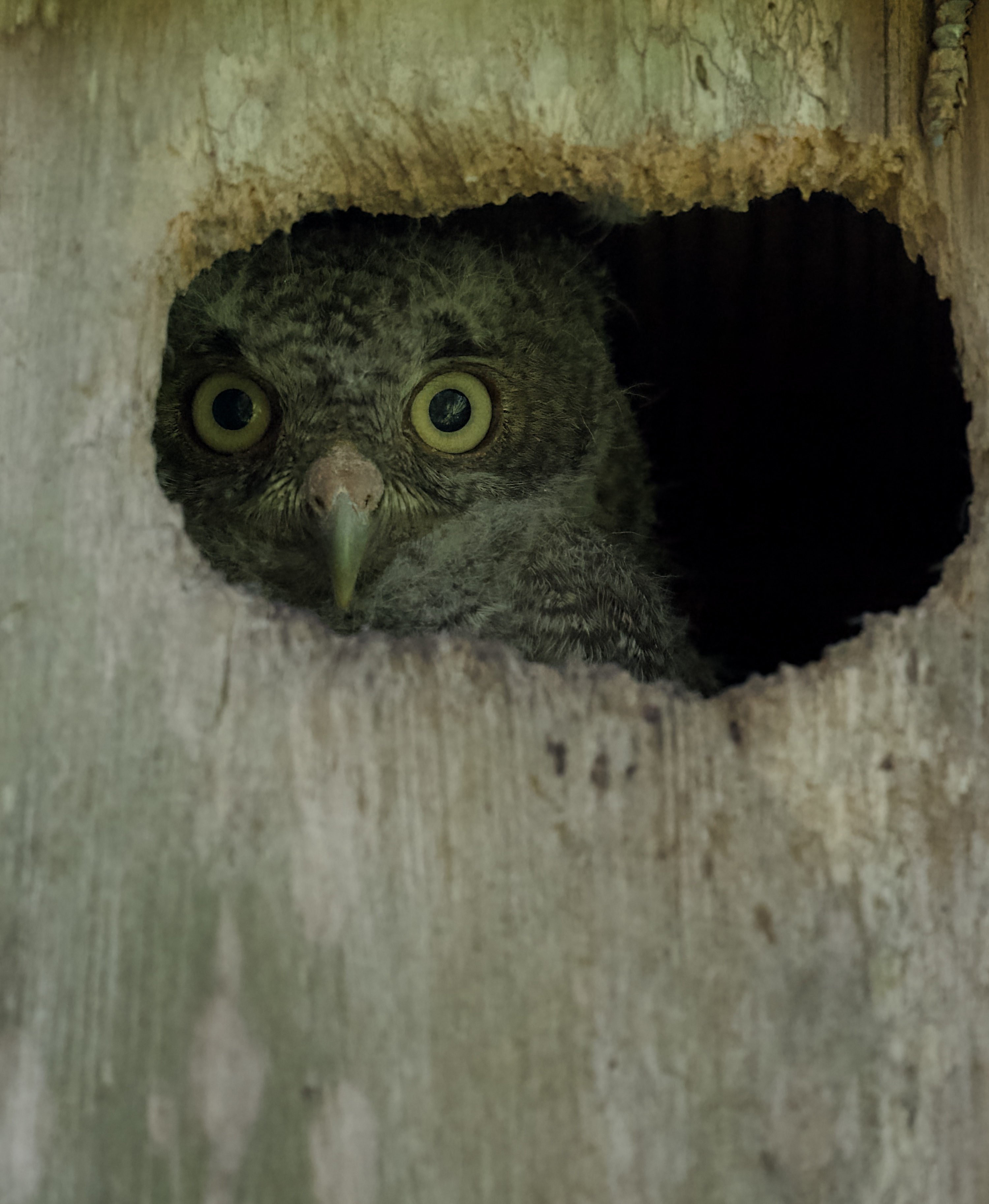
This photo is actually from earlier in the year, but I found it while doing my end of year review. We were lucky enough to find a screech owl nest at one of the parks we visit. I had previously only seen this species at rescues, so it was a really nice treat to see one in the wild and even better to see an owlet that was just a few days old.

The painted bunting has always been one of my favorite birds. The colors are just so vivid. It is more common in areas just south of Tampa Bay, but we were lucky to locate a single bird making a stop at Roosevelt Wetlands. Unfortunately, it was later in the day and the light was fading when the bird finally started coming up to the top of the dead brush to give us the best looks. The image was too dark to make a good print, but I still like it.
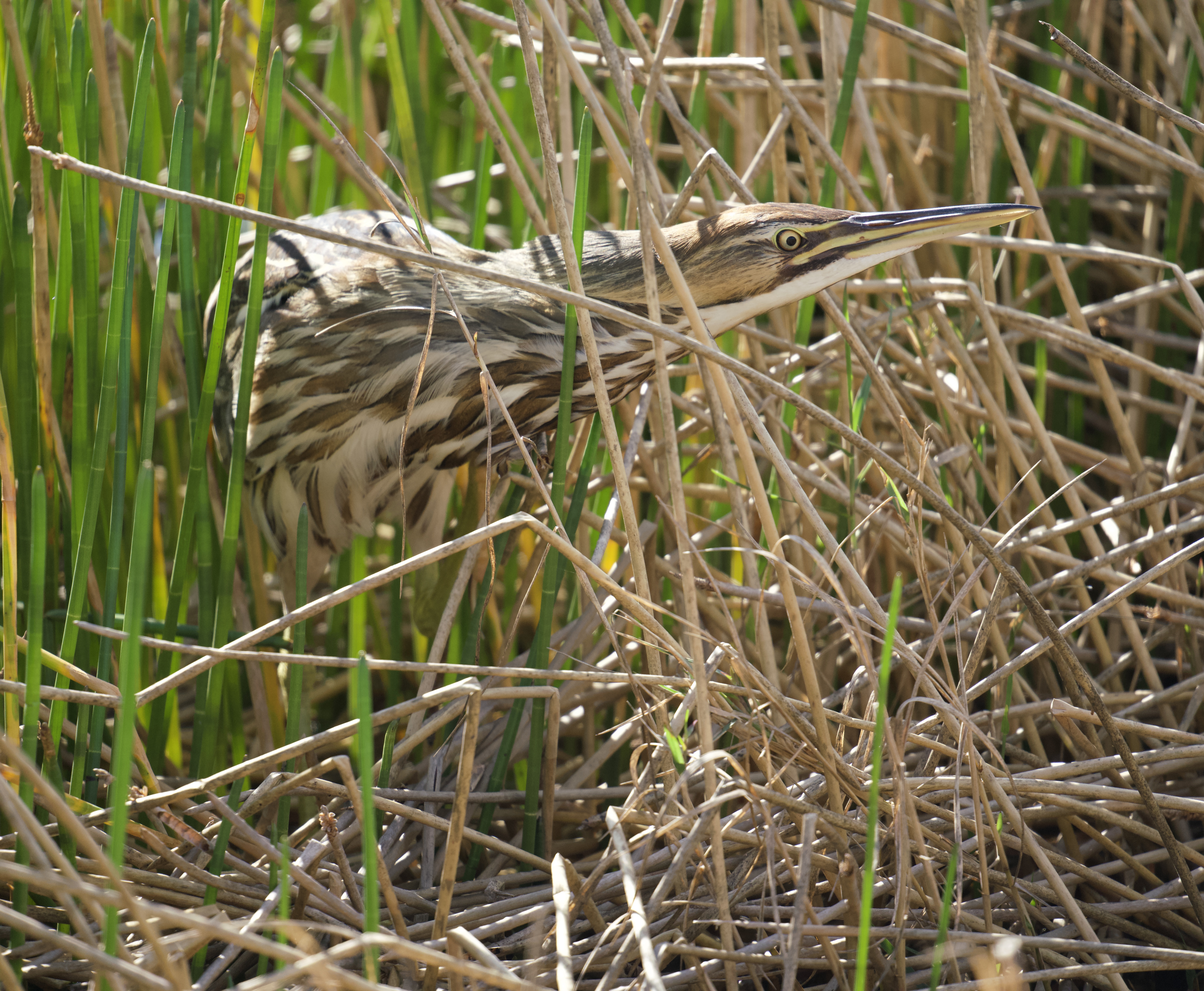
The American bittern is one of the most elusive wading birds, and it is becoming more uncommon as it nears threatened status due to the disappearance of the marsh and wetland habitats it needs for survival. We actually spotted this one while trying to find the painted bunting again. No luck on the bunting, but imagine my reaction when, as we came around a corner, there it was one out in the open. I froze and couldn’t believe our luck. We got a few shots of it before it started weaving in and out of the reeds and disappeared deeper into the wetlands, which is where you will find this large heron known for its booming call (oon-Ka-chunk). It is more frequently heard than seen, so this was a great find.
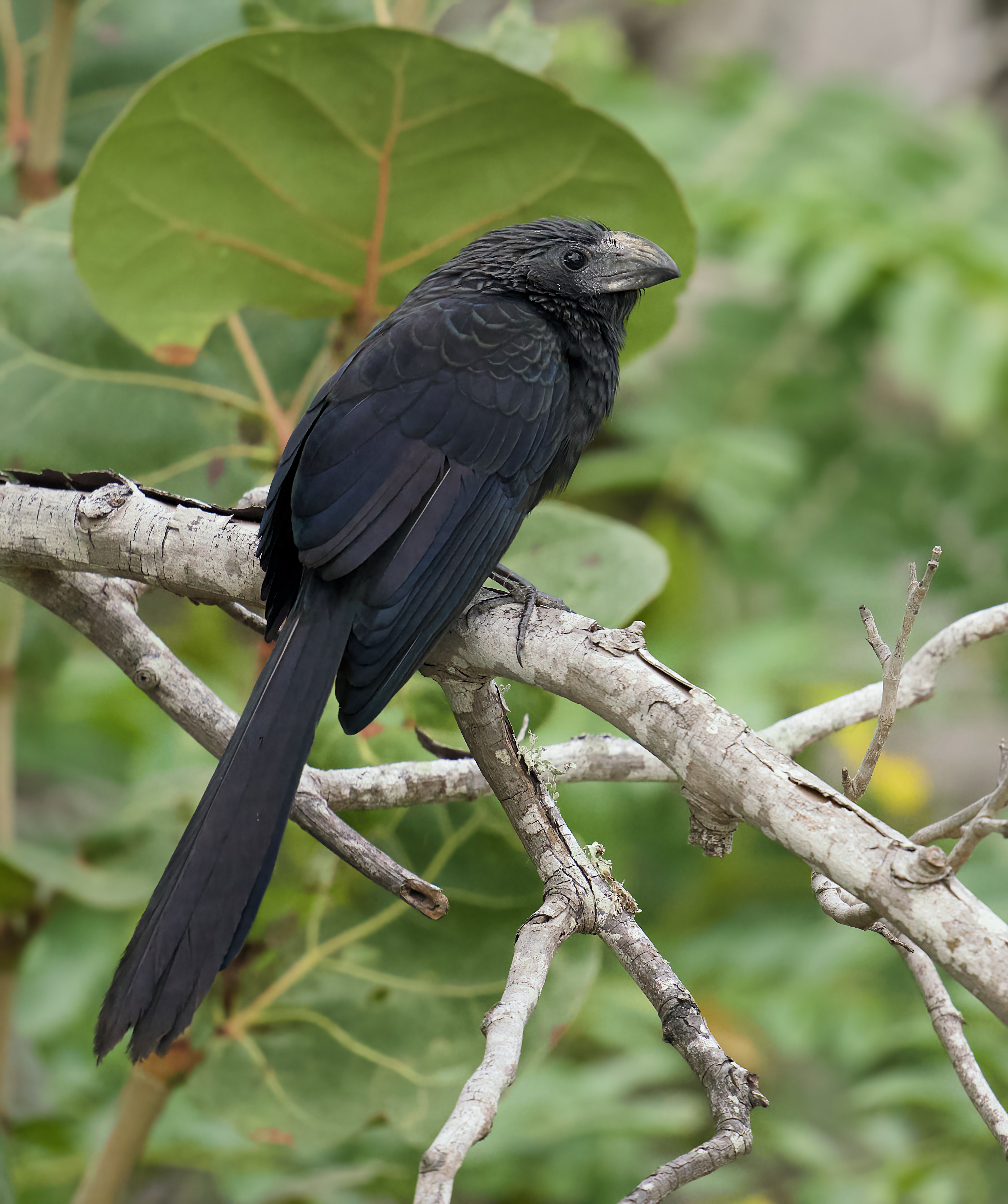
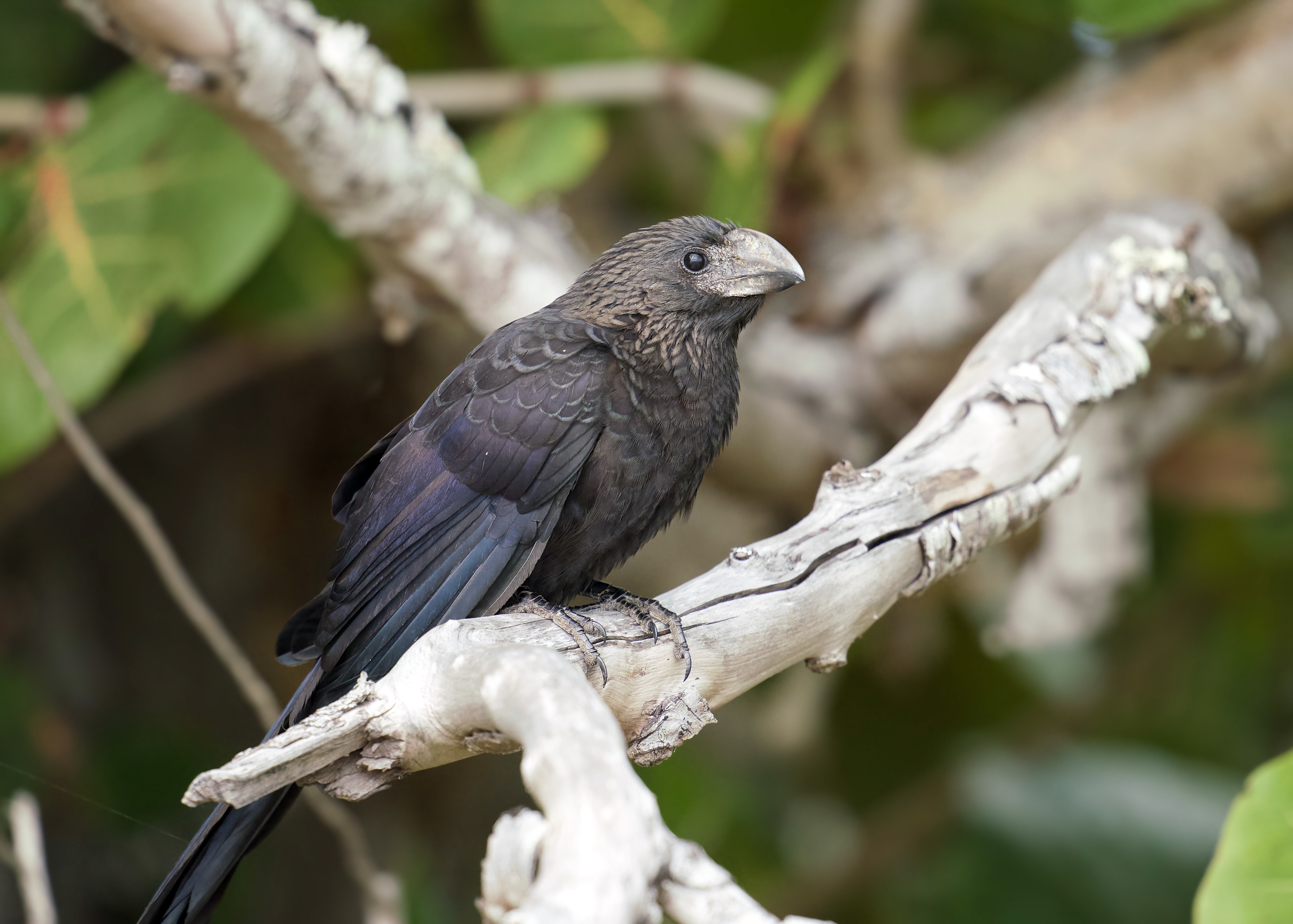
This one is an update to the November bird (the groove billed ani). On one of our recent outings at Fort De Soto we were lucky to respot that bird in better light than what you see on the calendar (image one). And as a bonus, it was traveling with a friend: the smooth billed variety (image two). The smooth billed ani used to be common in Florida in the middle of the last century, but it has all but disappeared from the peninsula and now we only get strays that find their way here from Cuba or Mexico. I tried real hard to get both in one frame, but just like a family photo they would not cooperate (looking in different directions or one with the head up while the other had it down).
Want to see more recent captures – visit my Instagram account: @lfp1211.
How You Can Help the Birds
And to end, here is what you can do to help the birds, especially those that are threatened and/or endangered:
- Give birds their space: if you see a colony of birds at the beach, try to give them a wide berth and avoid flushing them. Many birds flock together for protection and within that flock of common gulls there may be an endangered species traveling with them. Each time the birds are flushed, it causes them to spend energy that could be better used to avoid predators and find food. This also means keeping dogs on a leash around sensitive habitats.
- Prevent bird strikes: one of the leading causes of bird deaths can be easily prevented by using window decals or screens to prevent birds from crashing into large, exposed glass windows. This is especially important during key migration periods, when it is also important to minimize the use of outdoor lights (most birds migrate at night). Bright lights can confuse and disorient migrating birds that use the stars, moon and Earth’s magnetic field for navigation. Even just dimming your indoor lights or closing your curtains can make a big difference.
- Avoid feeding wild birds: while well intentioned, feeding wild birds can disrupt their natural foraging practices, bring them closer to areas where they can be struck by vehicles (an issue with big birds such as cranes) and also attract their predators. If you want to set up a bird feeder and/or a bird bath in your backyard, great, as long as you use the proper food and keep it clean and well managed. That will be appreciated by migrating birds who need the extra food, especially if you live in an area with a harsh winter season. I’m referring to just going to a park and offering ducks bread with no nutritional value, as one example. Or leaving food out at the beach where it can attract gulls, which will not stop at your French fries but go after the chicks of other birds such as skimmers and oystercatchers.
- Avoid the use of rat poison. If you have a rat or mice problem, look at other options such as traps. Rat poison is the leading cause of death for predators such as hawks and owls. We have witnessed the sad deaths of an entire owl family at one of our parks. The poison is ingested by the rats, but enventually it ends up building up in the bloodstream of the hawks or owls when they hunt the rodents. It is a sad way for these animals to die.
- Support conservation policies. Legislation that has allowed vulnerable species to stage a combat is now under attack. This includes the Endangered Species Act and the Migratory Birds Act. Reach out to your elected officials and ask them to take action to protect the birds. They are as much a part of the legacy we leave future generations as our national parks and other natural landmarks.
I hope you all have a wonderful holiday season and wish you all a happy 2026!
 The Website of Luis Perez